

By Ribble Landscapes
This might ruffle a few feathers in the landscaping world, but here goes:
We avoid cheap resin jointing compounds wherever possible. Especially on modern porcelain patios.
Not because they instantly fail. Not because they can’t be installed properly. But because fundamentally, the system makes very little sense.
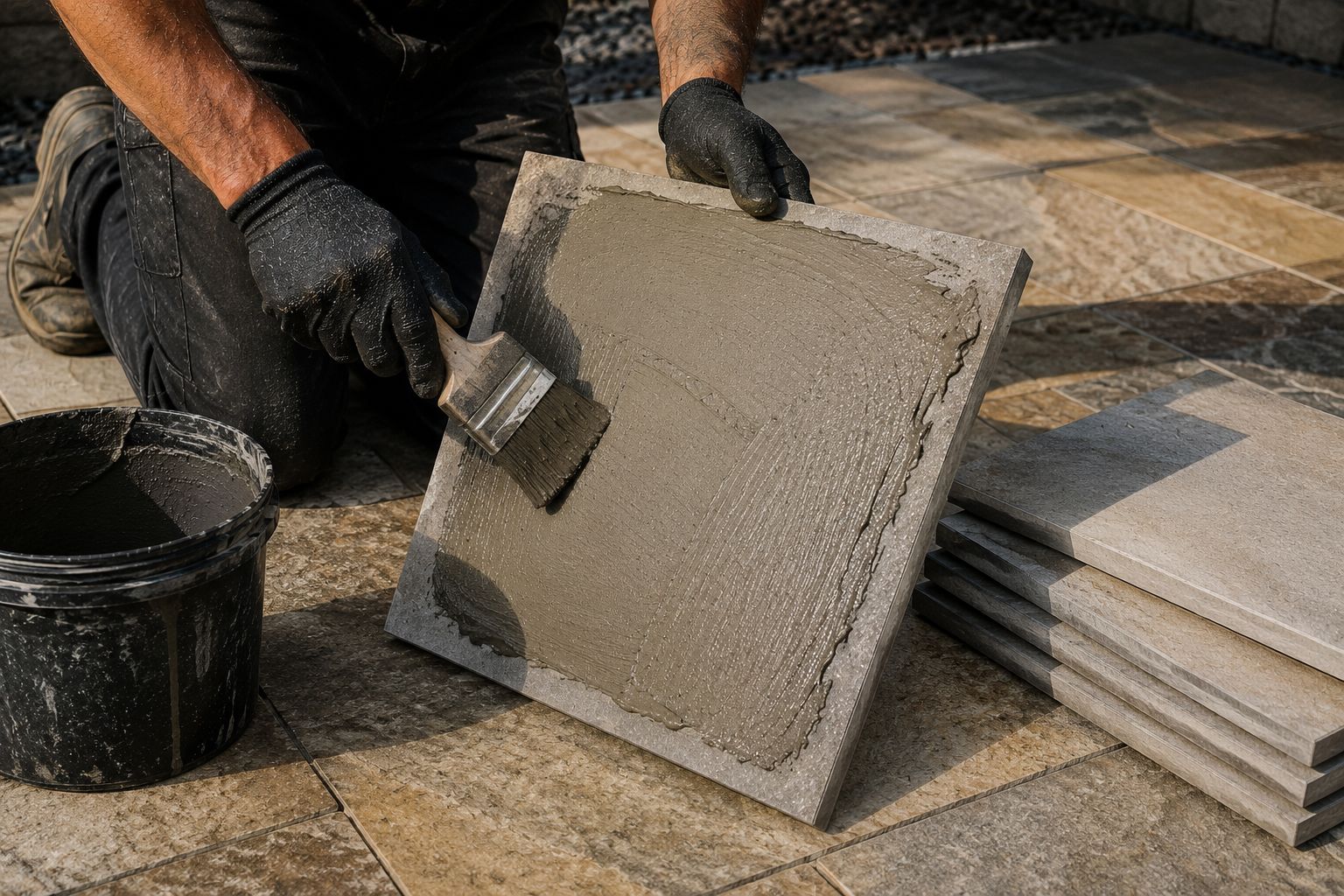
Most modern patios are built on a compacted MOT Type 1 sub-base with a full mortar bed and porcelain laid using priming slurry. In other words, a largely impermeable construction. Water is designed to run off the surface through carefully created falls and drainage channels, not disappear through the paving itself.
Which raises an obvious question.
Why are we then sweeping a permeable resin compound into the joints?
That contradiction is where the problems begin.
The sales pitch behind resin compounds always sounds brilliant. Water drains through the joints. Quick installation. Easy maintenance. DIY friendly. But in reality, especially on modern porcelain installations, the water often has nowhere meaningful to go.
Instead, moisture enters the resin joints and sits there above the solid mortar bed underneath. In shaded gardens, enclosed courtyards, or damp North West climates like Preston and the Ribble Valley, those joints stay wet for long periods of time. Eventually they become the perfect breeding ground for algae, moss, and organic staining.
We see it constantly.
A client chooses a lovely light resin colour called something like “Mushroom” or “Natural Stone,” and for the first few months it looks clean and uniform. Then winter arrives. Moisture lingers in the joints. Organic matter builds up. Before long, that soft beige colour has turned dark grey, almost black in places, with green growth forming inside the joints.
The paving itself still looks decent, but the joints suddenly make the whole patio feel tired and dirty.
This is especially noticeable on modern porcelain because porcelain suits crisp detailing and clean architectural lines. It looks best with sharp joints, minimal visual clutter, and consistent colouring. Cheap resin compounds rarely age in a way that complements that style. Over time they often become patchy, soft-looking, stained, and permanently damp in appearance.
The reality is that resin compounds became popular largely because they are easier and faster to install. They are forgiving, relatively low skill compared to traditional pointing methods, and heavily marketed toward convenience.
But easy installation and long-term quality are not always the same thing.
For modern porcelain patios, we generally favour Flowpoint-style grouts because they create a much more coherent paving system. Combined with proper falls, full mortar beds, priming slurry, and drainage, they help direct water away from the patio rather than allowing it to sit inside the joints.
The finish also simply looks cleaner. Sharper. More premium.
And honestly, there is still something incredibly solid about properly hand-pointed paving. It takes more time and more skill, which is probably why fewer contractors offer it now, but good traditional pointing ages beautifully when done correctly. Those older methods survived for decades for a reason.
The landscaping industry sometimes becomes obsessed with speed and labour-saving products, but patios are supposed to last. If a jointing system traps moisture, encourages algae, discolours quickly, and visually degrades within a year or two, then as professionals we have to question whether it really belongs on premium installations at all.
For pathways or budget patios, resin compounds may still have their place. But for high-end porcelain projects, we would avoid cheap sweep-in resin products wherever possible.
Because nothing ruins a clean modern patio faster than joints that permanently look wet, dirty, and biologically active.
A patio should age like stone. Calmly and gracefully. Not like the inside of a forgotten plant pot.
